Bonus Material: The Ursuline Academy
As a historical author, I love incorporating real pieces of history into my fictional works. When I decided to give a western spin to The Little Mermaid, I knew at once that I would set the story in Galveston, since that is one of the few places in Texas with significant ties to the sea. However, I did not expect to find an Ursula waiting for me there.
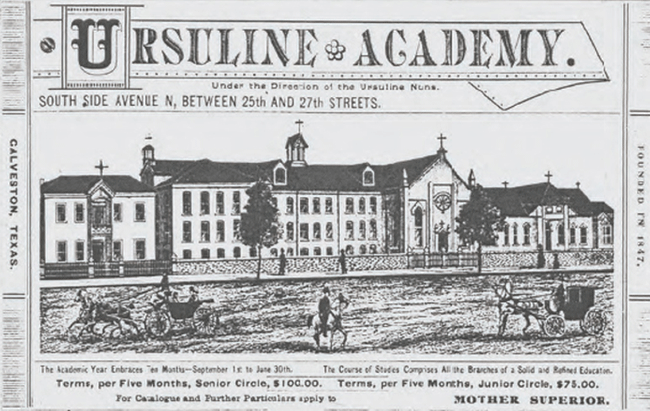
While studying an old map of the Galveston area, I discovered the Ursuline Academy for young ladies on Avenue N, also known as St. Ursula's by the Sea. According to the Galveston Monthly, The Order of St. Ursula was instituted in the 1500s for the purpose of educating girls and caring for the ill and needy. The Ursuline Order of nuns became the first female educators to cross the Atlantic and settle in North America. The Convent of New Orleans, founded in 1727, was considered a pioneering establishment for the education of youth in what would become the United States.
In 1847, a group of seven nuns left New Orleans and traveled across the Gulf of Mexico to Galveston to start a small convent there. They opened the first Catholic school for girls in Texas and soon gained a stellar reputation across the entire state. They expanded to accepting boarders and thrived despite being beset by fires, yellow fever, and civil war. Discovering this academy gave me goosebumps of the best kind. I knew I needed to incorporate the Ursuline Sisters into my story.
As I dug deeper into the research, I found records of a particular young nun who was buried in the Ursuline cemetery in 1894. Sister Mary Vincent Niemeyer had been born in 1860 and would have been twenty-six at the time of my story. She seemed like the perfect gentle soul to befriend Muriel during her stay at the academy. Tragically, Sister Mary Vincent died in 1894, but I'm sure she made an impact on many young girls' lives, just as she did for Muriel in this story.
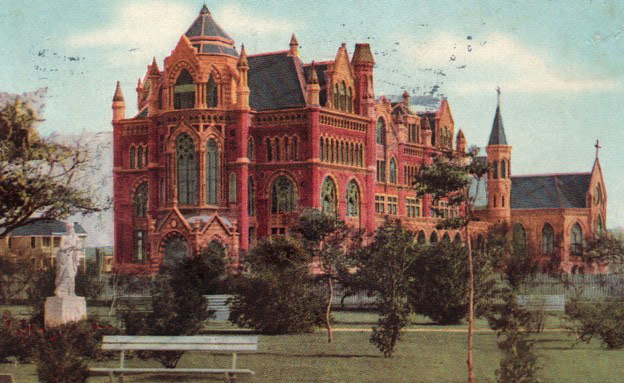
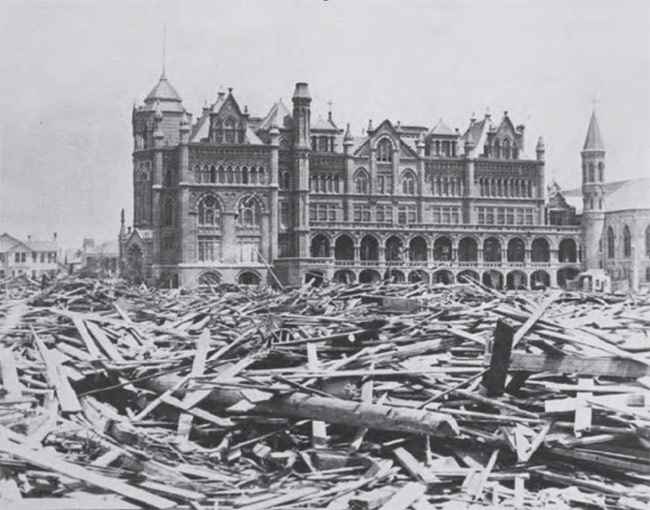
In 1891, the Ursuline nuns hired famed Galveston architect Nicholas J. Clayton to construct a larger building for their growing academy. Completed in 1895, it became one of the grandest examples of High Victorian Gothic architecture in the country. According to the Rosenberg Library Museum, the Ursuline Academy is considered Clayton's most impressive work. With its massive walls, towers, turrets, lofty roofs, and flying buttresses, it was a visual masterpiece. It even managed to withstand the devastating hurricane of 1900 and served as a refuge for an estimated 1,500 people who had lost their homes. Since my hero is an assistant architect to the great Nicholas Clayton, I like to imagine that Zane was part of the team that created such an amazing structural work of art.